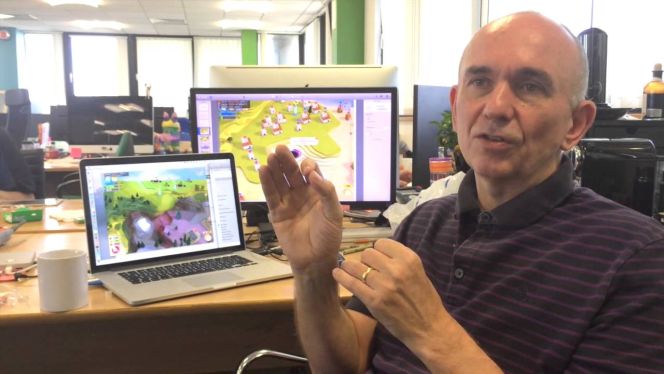
Peter Molyneux is a name that once carried legendary weight in gaming. The visionary behind Populous, Black & White, and Fable was celebrated as a pioneer of god games and moral choice mechanics. But behind the accolades lies a more complicated legacy—one defined by overpromising, missed deadlines, and broken trust.
Now, the real cost of that legacy is measured not in reviews or downloads, but in cold, hard money lost. Investors, fans, developers, and partners poured resources into projects that never delivered. Some backers lost thousands. Careers were derailed. Companies collapsed. And all under the shadow of a designer whose ambition consistently outpaced reality.
This is the story of the people who paid the price for Molyneux’s failed legacy.
From God to Godus: The Kickstarter That Overpromised Everything
In 2012, Peter Molyneux launched a Kickstarter for Godus, a spiritual successor to Populous. The pitch was intoxicating: a god game with infinite worlds, emergent civilizations, emotional followers, and persistent player influence. It promised "no loading screens," "real player-driven evolution," and a game that "learns from you."
The campaign raised £526,362—well beyond its £400,000 goal. Backers included hardcore fans, indie developers, and investors betting on Molyneux’s proven track record.
But Godus never came close to delivering. The final release in 2014 was a minimalist, procedural pixel art game with stripped-down mechanics and no multiplayer. The "emotional followers" were blocks. The promised updates stalled. The roadmap vanished.
For many backers, this wasn’t just disappointment—it was a financial loss. At higher tiers, contributors paid £75, £150, even £500 for exclusive access, production credits, or private design sessions with Molyneux himself.
One backer, a London-based game designer who pledged £200, said: > "I didn’t just lose the money. I lost faith in crowdfunding. I believed in him. I believed he’d finally make the game we all wanted. Instead, we got a tech demo with a price tag."
The Investors Who Bet Big on 22cans
After leaving Lionhead Studios, Molyneux founded 22cans, the studio behind Godus. To fund development, he turned to private investors—many of whom were introduced through his reputation and past successes.
While exact investment figures remain undisclosed, multiple sources suggest that 22cans raised several million pounds from angel investors and European tech funds. Some investors reportedly believed Godus would be a major indie hit, with potential for expansion into VR, education, and simulation markets.
But as delays mounted and the game’s quality stagnated, returns evaporated. By 2016, 22cans had shifted focus to experimental AI projects and mobile titles like Curiosity 2, which failed to gain traction.
One investor, who asked to remain anonymous, revealed: > "We were sold a vision—not a product. Molyneux is a brilliant storyteller, but storytelling doesn’t ship code. We backed a personality, not a pipeline. That’s a lesson learned the hard way."
The lack of transparency around 22cans' funding and runway suggests many investors saw little to no return. Some may have written off their stakes entirely.
Developers Who Lost Careers and Savings
Behind every failed project are the developers who worked on it—often for years, under pressure, and with personal sacrifices.
At 22cans, former employees have spoken anonymously about a toxic development culture. Long hours, shifting goals, and constant reboots of Godus led to burnout. Some team members took pay cuts or deferred salaries, betting on future success.
One ex-developer told Eurogamer: > "We were told we were making the next Minecraft. Then we were told it was an art piece. Then it was a tech experiment. We never shipped a finished game, but we all lost years of our lives."
Several developers left the industry entirely after their time at 22cans. Others struggled to find work, their portfolios tainted by association with a high-profile failure. For freelancers and contractors hired on short-term contracts, there was no severance, no support—just unpaid invoices and broken promises.
Publishers and Partners Left in the Lurch
Molyneux’s influence extended beyond his own studio. His name carried enough weight to attract publishing partnerships and licensing deals.
One notable casualty was the planned console and mobile expansion of Godus. Reports indicate that 22cans entered negotiations with a major publisher for a physical release and porting support. Contracts were drafted. Marketing materials were prepared.
Then, nothing.
The publisher pulled out in 2015 after repeated delays and concerns over the game’s stability and feature set. Internal emails, later leaked, questioned whether Godus was "shippable" in any meaningful form. The partnership collapse cost the publisher time and resources—and likely damaged future trust in crowdfunded indie titles.
Fans Who Lost More Than Money For many fans, the betrayal wasn’t financial—it was emotional.
Years of updates, livestreams, and Molyneux’s charismatic promises kept backers engaged. He hosted Q&As, posted screenshots, and even promised to visit top backers in person. But as time passed, communication became erratic. Promises were quietly dropped. The game changed beyond recognition.
One long-time follower, who backed Godus and promoted it heavily on social media, said: > "I defended him when people called him a scam artist. I said, ‘Give him time.’ But when the final version launched, I felt embarrassed. I’d hyped up a ghost."
The psychological toll of being misled—especially by someone once revered—can be as damaging as financial loss. Trust, once broken in the gaming community, is hard to rebuild.
The Ripple Effect on Crowdfunding Trust
Godus wasn’t the only failed Kickstarter, but it became a cautionary tale.
At the time, Kickstarter was still establishing credibility in the gaming space. High-profile successes like Double Fine Adventure had shown the model could work. But Godus demonstrated its dangers: a beloved figure using reputation to bypass scrutiny.
In the years following Godus, crowdfunding platforms tightened policies. Backers became more skeptical. Developers were forced to deliver detailed roadmaps, prototypes, and regular updates.
Yet the damage was done. A 2017 Gamasutra survey found that 63% of respondents had backed at least one game that failed to deliver as promised—and Godus was among the most frequently cited examples.
Some fans now refuse to back crowdfunded games entirely. As one Reddit user put it: > "I’ll wait for Steam Early Access. At least then, I can see the game running before I pay."
/cdn.vox-cdn.com/uploads/chorus_image/image/70269281/112379621.0.jpg)
Was Molyneux Responsible or Just Misguided?
It’s tempting to paint Peter Molyneux as a fraud. But the truth is more nuanced.
By all accounts, he believed in Godus. He wasn’t scheming—he was overly optimistic. His sin wasn’t malice, but a chronic inability to temper vision with execution.
In a 2015 interview, Molyneux admitted: > "I make these grand promises, and I believe them when I say them. But I don’t always understand the cost of delivering them."
That self-awareness came too late for those who lost money. Passion doesn’t pay rent. Belief doesn’t cover invoices. And no amount of regret erases the financial and emotional toll on those who followed him.
The Lasting Cost of a Broken Legacy
Today, Peter Molyneux works on smaller AI-driven experiments. 22cans is a shadow of its former self. Godus remains in limited availability, ignored by most of its original backers.
But the real legacy isn’t in the games that were or weren’t made. It’s in the people who believed—and paid the price.
Investors lost capital. Developers lost careers. Fans lost trust. And the industry lost a chance to prove that visionary indie development could scale without compromise.
What Can Be Learned?
If there’s a lesson in Molyneux’s downfall, it’s this: reputation is not a substitute for accountability.
For backers: - Research the team’s track record of delivery, not just their vision. - Question promises that sound too ambitious. - Demand prototypes, not PowerPoint.
For developers: - Under-promise and over-deliver. - Communicate setbacks early. - Protect your team’s well-being over hype.
For the industry: - Celebrate honesty as much as innovation. - Support transparency in crowdfunding. - Hold icons accountable, not just anonymous indies.
Peter Molyneux’s legacy is no longer just about the games he made. It’s about the promises he couldn’t keep—and the real people who suffered because of them.
The players who lost big weren’t just gamblers. They were believers. And sometimes, that’s the most expensive bet of all.
FAQ
Who funded Peter Molyneux’s Godus project? Godus was primarily funded through Kickstarter, raising over £526,000 from 17,545 backers. Additional funding came from private investors through 22cans.
Did Peter Molyneux return money to Godus backers? No, Molyneux and 22cans did not issue refunds. The game was released in a limited form, which many backers considered inadequate.
How much did investors lose on 22cans? Exact figures are undisclosed, but estimates suggest several million pounds were invested with little to no return.
Why did Godus fail to deliver on its promises? The game suffered from overambition, poor technical execution, shifting design goals, and a lack of experienced project management.
Is Peter Molyneux still making games? Yes, but on a much smaller scale. 22cans now focuses on AI experiments and niche projects, with no major releases in recent years.
Did any legal action result from the Godus failure? No major lawsuits were filed, though there were complaints to the UK’s Advertising Standards Authority over misleading Kickstarter claims.
What happened to the developers who worked on Godus? Many left 22cans due to burnout or disillusionment. Some left the game industry entirely, while others moved to more stable studios.
FAQ
What should you look for in The Players Burned by Peter Molyneux’s Broken Promises? Focus on relevance, practical value, and how well the solution matches real user intent.
Is The Players Burned by Peter Molyneux’s Broken Promises suitable for beginners? That depends on the workflow, but a clear step-by-step approach usually makes it easier to start.
How do you compare options around The Players Burned by Peter Molyneux’s Broken Promises? Compare features, trust signals, limitations, pricing, and ease of implementation.
What mistakes should you avoid? Avoid generic choices, weak validation, and decisions based only on marketing claims.
What is the next best step? Shortlist the most relevant options, validate them quickly, and refine from real-world results.